

A life jacket can make all the difference when your dog is on the water, whether that's a kayaking trip, a day at the lake, or a boat ride with the family. But the right jacket is only as good as its fit. Too loose and it won't keep your dog afloat properly. Too tight and it restricts movement and breathing.
Getting it right isn't complicated. It takes three measurements, a few minutes of dry-land testing, and knowing what to look for once the jacket is on. Here's exactly how to do it.
Start with Three Measurements
Before you look at a single size chart, you need three numbers: neck circumference, back length, and chest girth. Grab a flexible measuring tape and have someone help hold your dog still. Most dogs aren't thrilled about standing quietly for this, so treats help.
Measure around the base of the neck, just above where the collar sits. Keep the tape snug but not tight. This determines whether the neck opening will sit correctly without chafing or gapping away from the body.

Measure at the base of the neck, where the collar normally sits.
Measure from the base of the neck to the base of the tail. This tells you whether the jacket will cover your dog's body correctly from front to back. A jacket that's too short leaves the hindquarters unprotected and can ride forward. Too long and it will bunch at the hips or restrict movement.

Back length runs from the base of the collar to the base of the tail.
Wrap the tape around the widest part of the chest, just behind the front legs. This is your most critical measurement. Chest girth determines whether the belly straps and buckles will close securely and whether the jacket can actually support your dog's weight in the water. When two sizes are close, let this number decide.

The chest girth is your most important measurement. Take it at the widest point, just behind the front legs.
What to Look for in a Life Jacket
Not all pet life jackets are built the same. Here's what separates one that actually works from one that just looks the part.
Buoyancy placement matters. A well-designed jacket distributes flotation evenly, with extra buoyancy around the neck and chest to keep your dog's head above water naturally. If the buoyancy is concentrated in only one area, the jacket can roll your dog onto their side in the water rather than keeping them upright.

A top-mounted rescue handle is non-negotiable. If your dog slips off the boat or gets into trouble in a current, that handle is how you pull them back quickly. It should feel solid and be stitched to the jacket's structure, not treated as an afterthought.

Multiple adjustment points. Dogs come in wildly different proportions. Deep-chested breeds, long-bodied dogs, barrel-chested breeds all fit differently. Look for at least two belly straps and a neck closure so you can get a secure fit regardless of your dog's build.

Reflective trim for visibility. If you're on the water in low light or your dog drifts from the boat, reflective accents help you locate them fast. It's a small detail with real consequences when you need it.
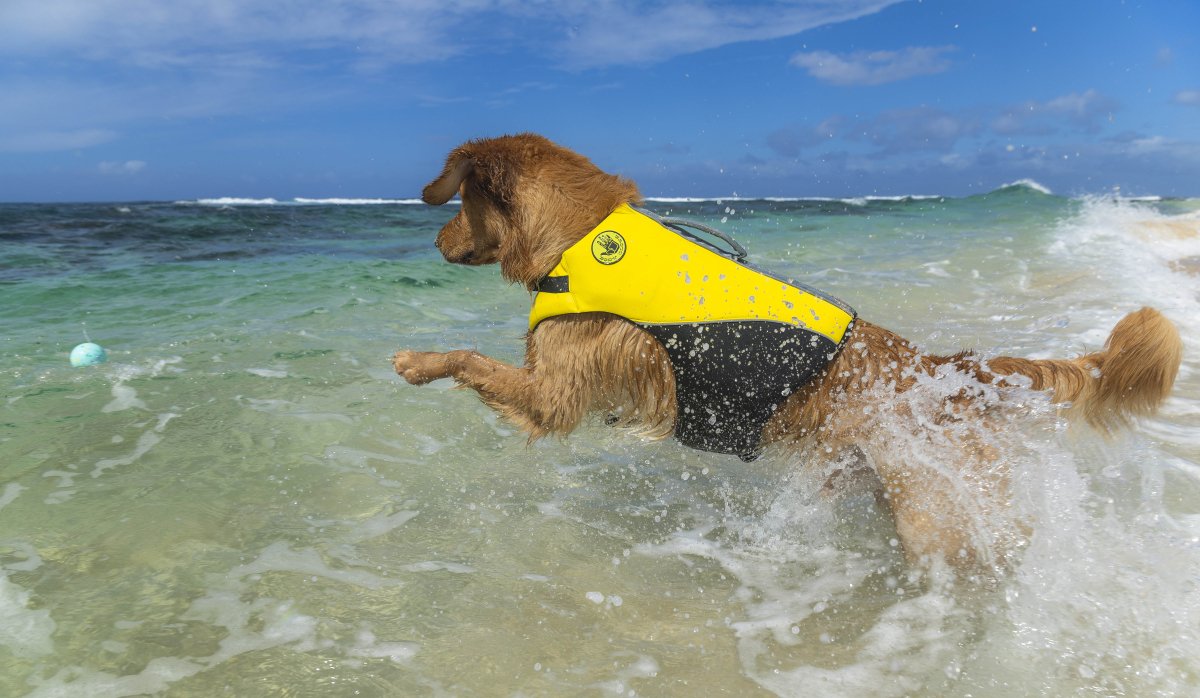
High-visibility color. Bright yellow, orange, or pink makes your dog easy to spot in the water. This isn't about aesthetics. It's about being able to find your dog quickly from a distance or from the surface.

Built for Dogs Who Take the Water Seriously

The Body Glove Pet life jacket collection brings the same performance standards Body Glove has applied to water sports gear for decades. Durable construction, thoughtful buoyancy placement, a solid rescue handle, and a fit that adjusts to your dog's actual proportions. Available in high-visibility colors with reflective trim.
Shop Body Glove Pet Life JacketsHow to Check the Fit Before You Hit the Water
Measurements get you close. The fit check tells you whether you actually got it right. Put the jacket on dry land first and go through this list before you're standing at a boat dock.
- You can slide two fingers under any strap or around the neck opening, but not more. A full hand means it's too loose.
- The jacket sits level on your dog's back without tilting toward the head or sliding toward the tail.
- All buckles close completely and click securely. If any buckle is strained or won't fully engage, the jacket is too small.
- Your dog can walk, trot, and turn without the jacket restricting stride or bunching between the legs.
- The neck opening sits comfortably at the base of the neck without pressing into the throat or leaving a wide gap.
- The rescue handle is centered on the back, lies flat when not in use, and holds firm when you give it a tug.
- The jacket doesn't ride up over the shoulders when you lift your dog by the handle. If it does, tighten the belly straps.

Too large: the jacket rides up and gaps, compromising buoyancy and safety.

Correct fit: jacket sits level, straps are snug, rescue handle is centered and accessible.
It's also worth a brief water test in a controlled environment before open water. A shallow pool or calm lake edge lets you confirm the jacket keeps your dog's head up naturally and that nothing shifts when submerged. If the jacket rides up in the water, bring the belly straps in.
A Few More Things Worth Knowing
Breed body type affects fit significantly. A deep-chested Greyhound fits very differently than a barrel-chested Bulldog at the same weight. Always measure first and prioritize chest girth over the weight ranges on size charts.
Senior dogs and dogs with mobility issues may need a jacket with softer, more flexible construction. Look for neoprene or soft-shell materials over rigid foam panels if range of motion is a concern.
Puppies grow. A jacket that fits snugly at four months may not make it to summer. Size up slightly with room to adjust, or plan on a second jacket as they mature.
Introduce the jacket on dry land first. Let your dog wear it around the yard before their first water trip. Dogs who have never worn a jacket may freeze or walk strangely the first time. A little familiarity before the boat launch goes a long way.

Double belly buckles allow precise adjustment across different body shapes. Each strap should close fully with room to fit two fingers underneath.

High-visibility color and a solid rescue handle are two things worth confirming before every trip on the water.
Ready to Get in the Water?

Shop the Body Glove Pet life jacket collection, designed for dogs who take water seriously. Use the measurements above to find your dog's size, and reach out if you have questions about fit.
Shop Life Jackets Contact Us